
This guide provides general property-care information, not medical advice. Contact a healthcare professional or public-health authority for personal health concerns.
Dry methods can put more material into the air
A dry broom or aggressive scraping may look like the fastest way to clear a balcony, but those methods can break dried material into smaller particles and move dust through the work area.
CDC and NIOSH guidance advises against dry sweeping or shovelling potentially contaminated material. Their guidance emphasizes controlling dust and carefully wetting material before removal where appropriate.
The size and condition of the buildup matter
A few fresh spots are not the same project as an old accumulation containing droppings, feathers, nesting material, and debris. Larger or enclosed conditions need more deliberate planning, and official guidance recommends specialist help for large accumulations.
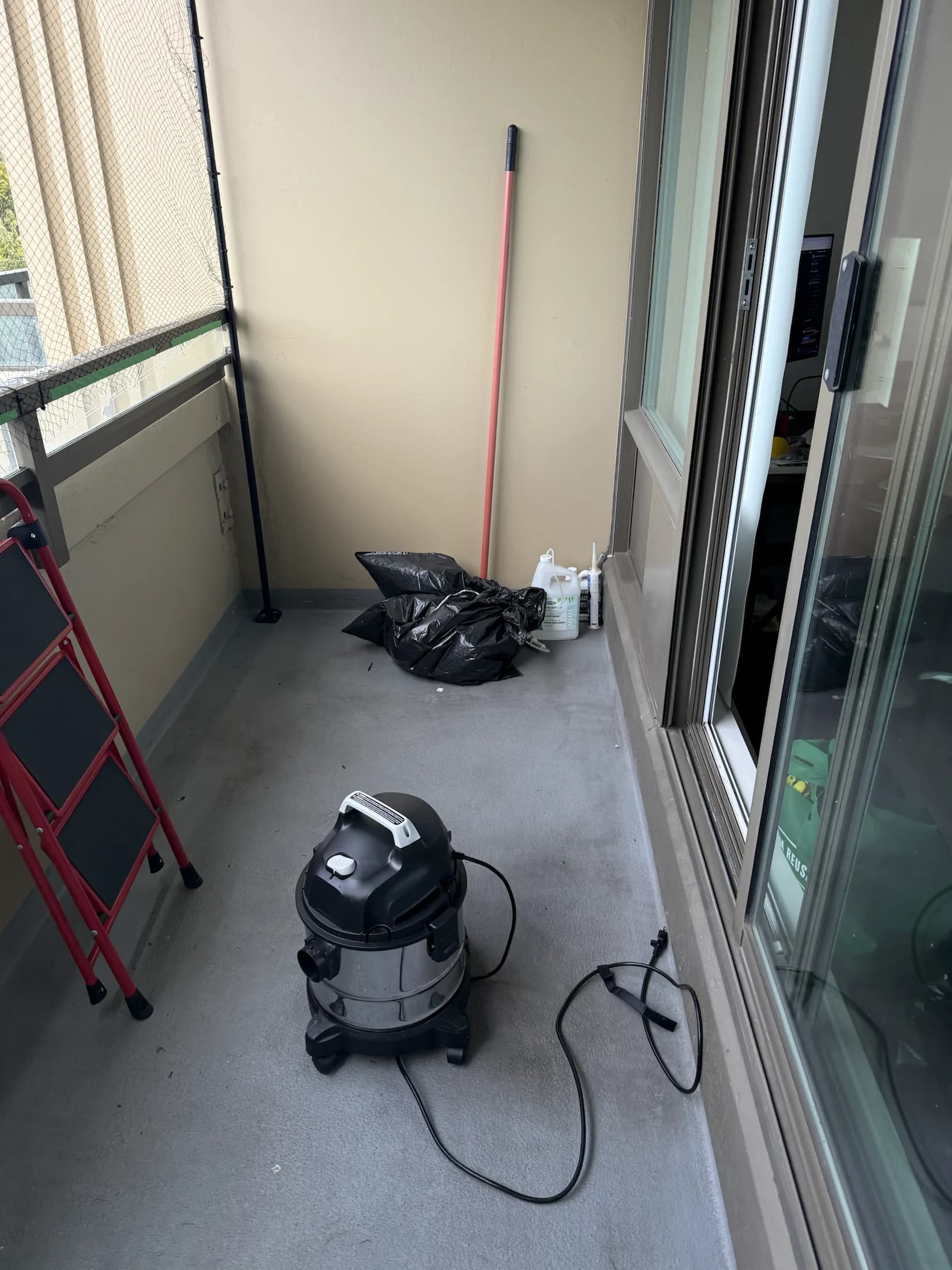
Photos should show the entire affected area, not only a close-up. That context helps identify access limitations, nearby doors or air intakes, and whether a bird-exclusion measure should follow cleanup.
- Do not use compressed air or a leaf blower on dried droppings.
- Avoid moving dusty material through occupied indoor areas without a plan.
- Treat cleanup and prevention as one property problem when birds are still returning.
Cleanup alone does not stop the next buildup
Once the area is reset, the next question is why pigeons can still enter or land there. Full balcony openings often point toward netting, while a defined ledge may be better suited to spikes or another deterrent.
A photo-led quote lets Bird Control BC review both the existing condition and the likely repeat-access route before discussing the scope.